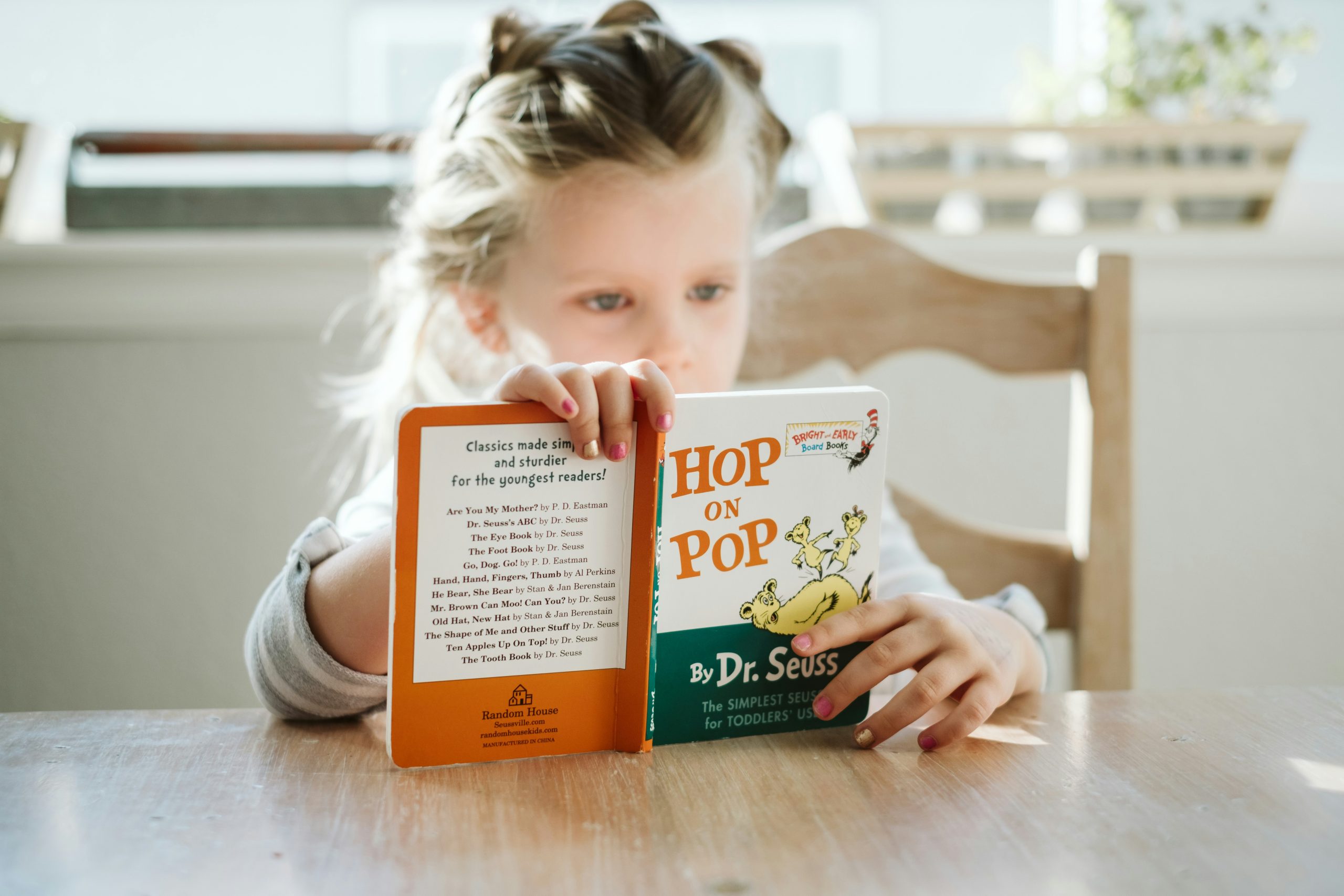
: Learning to read is the foundational skill all children need to master, as reading underpins all of education. But it is an incredibly complex and multifaceted skill that our human brain is not innately wired for, says Sarah Ohlson de Fine, a Grade 3 teacher at Bellavista School.
PQ: “As a human you are born ready to listen and learn language, ready to learn
the motor skills to walk and run. But you’re not born ready to read.” -Sarah Ohlson de Fine
What is reading?
Reading is a complex man-made skill that involves several parts of your brain. When we read a word (for example, ‘cat’), we take the visual information of letters on a page (in this case, the letters c – a – t). We then process this visual information by linking the visual image of the letters to the sounds these letters represent. Then we link that information to a concept you already know about that word – the picture of a cat, your cat at home, or cats you may have seen. This all happens in microseconds.
The goal of reading is to understand what you read
The goal of all reading is comprehension. We want children to be able to understand, and make meaning of, what they read. To break this down into more manageable parts, we look to this model: The Simple View of Reading (Gough and Tunmer, 1986).
According to The Simple View, Reading Comprehension is the quotient of word recognition and language comprehension.
What is a quotient?
It is the answer you get when two factors are multiplied. If you think back to the mathematics you learned at school, you will know that if there is a problem with one of the factors, it will impact the answer. The Simple View formula makes it clear that good reading comprehension cannot occur unless both one’s decoding skills and language comprehension abilities are intact.
How can we help children learn to read?
In the early years of formal education there is a distinct focus on teaching children the letters of the alphabet and the sounds that these letters make. This is called phonics, and it forms the basis of reading and spelling. Children need a lot of practice when learning their phonics skills. It is not enough for them to be exposed to a concept once only; they need to continue to build on and practise that concept. Children also need to review their phonics skills year after year and build on that knowledge.
Once they have learned the alphabetic code, vocabulary is the single most important factor in reading comprehension. Vocabulary refers to the students’ knowledge of and memory for word meaning, and there is a remarkably close link between reading comprehension and vocabulary.
Vocabulary can be broken down into two separate categories: receptive and expressive language. Receptive language comprises the words we understand; expressive language, the words we use to communicate.
Children learn the meanings of most words indirectly, through everyday experiences with oral and written language. Other words are learned through carefully designed instruction. Researchers agree that vocabulary is critical to reading comprehension because it overlaps with verbal intelligence and background knowledge. Good reading comprehension depends on knowing the meanings of the words in the text.
So – how can we build strong readers?
According to “On Becoming a Nation of Readers: The [US] Report on the Commission on Reading”, the “…single most important activity for building the knowledge required for eventual success in reading, is reading aloud to children – even when they are very young.”
Reading aloud to children is an extremely beneficial and important process in both their learning to read and developing a love of reading. Reading aloud to children is how they start to develop a broader vocabulary. It also builds the connections between the spoken and written word, provides enjoyment and promotes bonding. By reading aloud to children you can increase their attention span and strengthen their mental processing skills.
