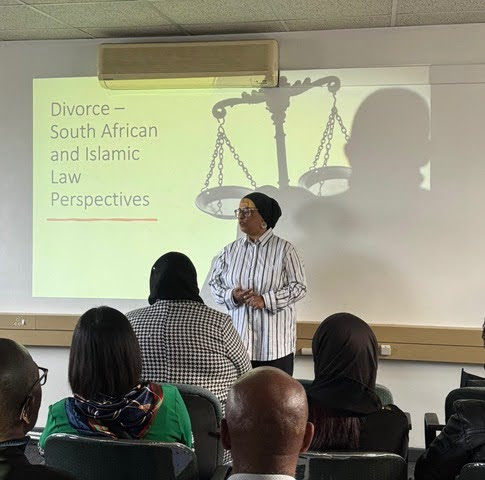
The University of the Western Cape (UWC) is making strides in community engagement and education with its impactful outreach projects designed to demystify legal frameworks and their practical applications in everyday life. A recent initiative held at ENSafrica’s Pro Bono offices in Mitchells Plain, led by Dr Fatima Essop, brought to light critical insights on the interplay between South African and Islamic divorce laws.
Dr Essop, a senior lecturer in Islamic Studies at UWC and a founding member of the Muslim Family Law Hub, conducted a workshop titled Navigating Divorce – A South African and Islamic Law Perspective. The session provided a platform for interactive discussions, allowing participants to grapple with the complexities of navigating Islamic divorces within the South African legal context.
“The workshop allowed me to share insights on these intersecting legal frameworks with an engaged audience,” Dr Essop remarked, highlighting the importance of such initiatives in forging connections within the community.
One of the workshop’s most poignant moments came during the dynamic breakout discussions that followed, where community activists, court officials, and Imams shared tangible challenges that residents face when navigating the legal paths of Islamic divorce. Dr Essop noted, “What made the day particularly meaningful were the dynamic breakout discussions that followed. Community activists, court officials, and Imams from neighbouring areas shared real challenges faced by community members navigating Islamic divorces within South African law.”
The Muslim Family Law Hub seeks to address these intricate matters by providing guidance on reconciling Islamic family law principles with the stipulations of South African state law. “These meaningful exchanges yielded invaluable insights into the challenges community members face when navigating Islamic divorces within the South African legal system,” Dr Essop explained. “These conversations highlighted precisely why this work matters so much. The perspectives shared will inform our ongoing efforts to create a better understanding and practical solutions at this complex legal intersection.”
The event is timely, particularly in light of a recent court ruling regarding the Divorce Amendment Act 1 of 2024, which clarified Rule 43 and Talaq in divorce proceedings for Muslim couples. In this pivotal case, the applicant argued for interim maintenance and legal costs while divorce proceedings were ongoing, despite the respondent having issued a Talaq, illustrating the pressing need for clear guidance in these matters.
As UWC continues to spearhead these educational initiatives, the critical intersection of Islamic and South African legal frameworks only underscores the necessity of fostering understanding and support for those navigating divorce within these intertwined systems.
